Working to protect the Mississippi River and its watershed in the Twin Cities area

Gov. Dayton steps up to stop Asian Carp

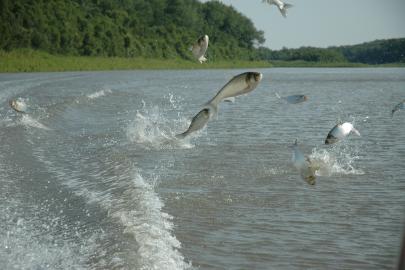
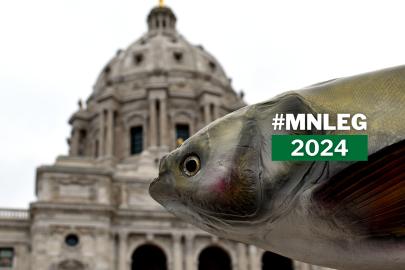
"Flying" silver and other Asian carp are voracious eaters and rapid breeders that threaten to cause major disruption and displace native aquatic ecosystems.

Photo: Great Lakes Fishery Commission

The recent discovery of Asian Carp DNA in the St. Croix River has jolted state officials into action. While efforts to net an actual fish have turned up empty thus far, Gov. Dayton is calling for quick action to stop Asian Carp from invading Minnesota's treasured waters.

Asian Carp includes four carp species (bighead, black, grass and silver), all voracious eaters and rapid breeders that threaten to cause major disruption and displace native aquatic ecosystems. Currently there are large populations in the Mississippi River downstream from Iowa and numerous individual fish have been found in Iowa. To date, only a handful of Asian Carp have been caught in Minnesota, meaning there is still time to stop or at least slow their upstream progression.

"We owe it to future generations to do everything we possibly can to prevent this," said Gov. Dayton at an early September summit on the issue. Summit participants included congressional staff, state legislators, natural resources agency staff from Minnesota, Wisconsin and Canada, and representatives from the White House Council on Environmental Quality, U.S. Army Corps of Engineers and National Park Service.

At the summit, Dayton released a plan outlining critical first steps. In addition to calling for a cooperative effort with state and federal partners, he urged immediate action to secure federal authority to close Lock #1 or Upper St. Anthony Falls Lock if Asian Carp are found nearby. He also called on Congress to authorize a study of the economic and environmental impacts of closing the Upper St. Anthony Falls Lock to create a permanent Asian Carp barrier. Other recommended actions include utilizing alternative control methods such as bubble barriers, improving native fish habitat and testing various methods to eradicate carp populations.

FMR is working closely with a coalition of nonprofits led by the National Wildlife Federation to help government agencies progress on the issue, educate the public, and advocate for specific short- and long-term actions. So far, we are pleased the Governor and the Minnesota Department of Natural Resources are moving quickly to embrace many of the same actions advocated by the coalition.

Details for Dayton's action plan will be forthcoming, as will coalition advocacy efforts and ways that citizens can get involved. As always stay tuned.

Recent media coverage For more information: