
Stream Health Evaluation Program
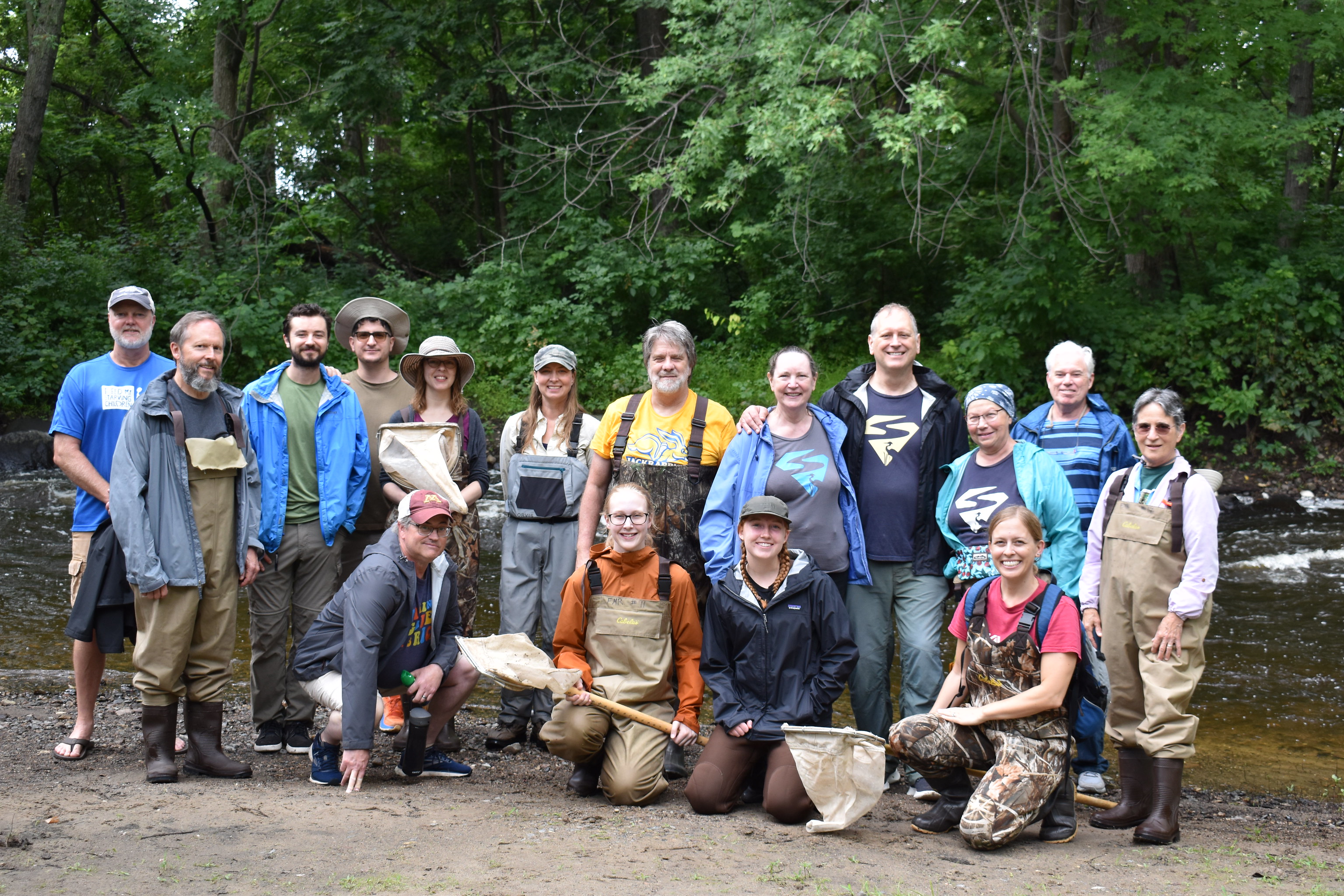
Since 2006, FMR has coordinated the successful Stream Health Evaluation Program (SHEP) in the Rice Creek Watershed District.
Modeled after the Wetland Health Evaluation Program, SHEP was designed in partnership with the Minnesota Pollution Control Agency and Minnesota Waters. SHEP uses trained volunteers to evaluate the biological health of streams by sampling benthic macroinvertebrates, small stream-dwelling critters, including insects and crustaceans.
Why bugs? In general, benthic macroinvertebrates (benthic: bottom-dwelling [living below the water surface on the substrate]; macro: visible to the naked eye; invertebrate: animal lacking a backbone) are a collection of insects and crustaceans such as stoneflies, midges, snails and crayfish. These organisms are commonly monitored to help us evaluate the water quality of our surface waters. Simply stated, they serve as tiny, living water-quality indicators.
Macroinvertebrates serve as good indicators of overall stream health for several reasons:
- They are relatively common and easy to collect.
- They occupy several trophic levels within a lake or stream.
- Some of them have long life cycles of a year or more and are exposed to environmental changes throughout their lifespan.
- They cannot move to avoid poor water-quality conditions and are therefore susceptible to pollution over longer periods of time.
In a nutshell, different macroinvertebrates have different reactions to pollution. Some are very tolerant and can live in any water conditions, but others are very sensitive and can only survive in good water quality conditions. As a result, the presence or absence of macroinvertebrates can effectively illustrate the conditions of our local streams, rivers and lakes.
SHEP Volunteers
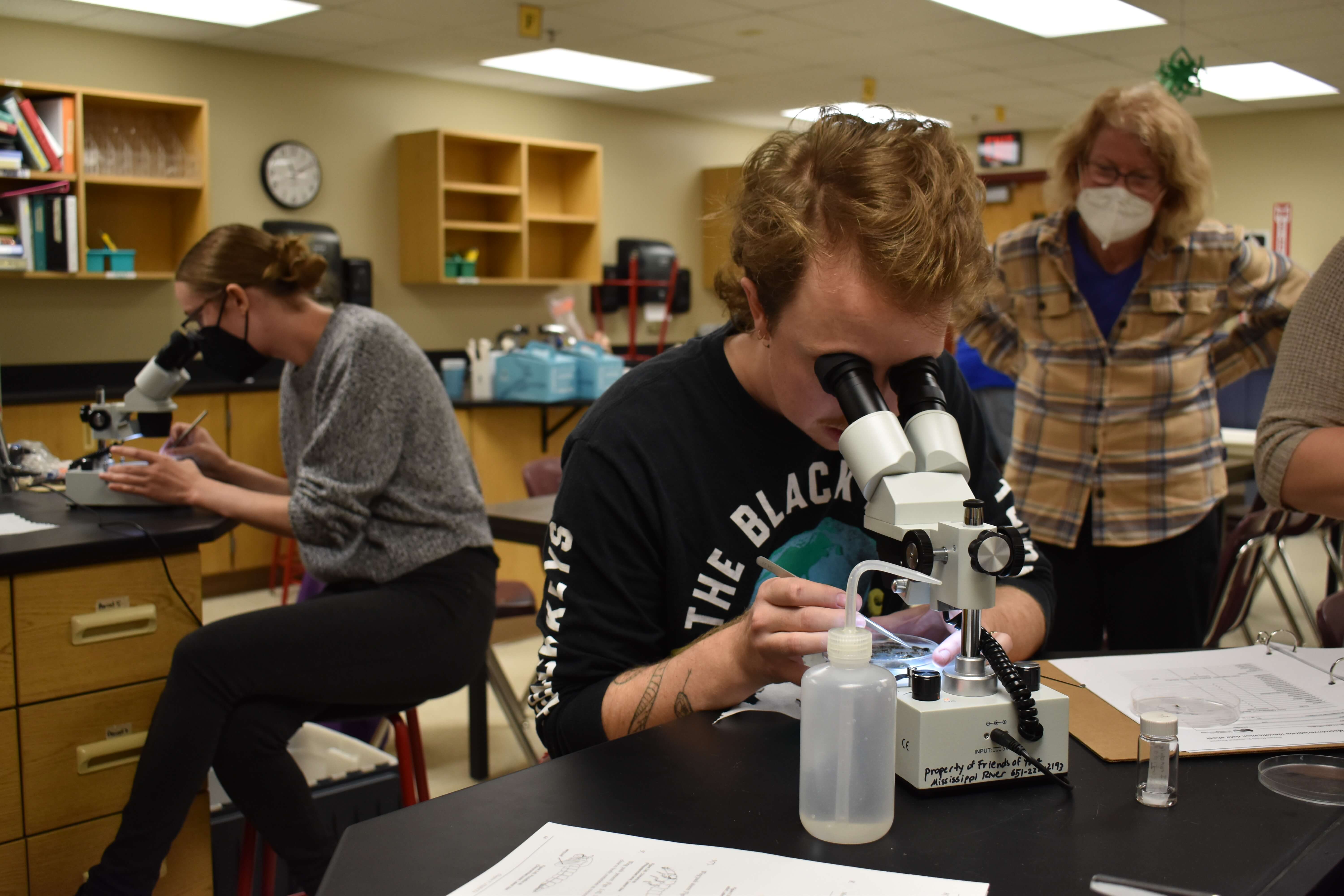
During lab sessions, SHEP volunteers look at macroinvertebrates under microscopes to identify different species.
Each season, around 30 volunteers from across the watershed and surrounding communities monitor nine sites along Hardwood Creek, Clearwater Creek, Rice Creek and Locke Lake. Volunteers form three teams led by team leaders.
Volunteers receive extensive training on the Minnesota Pollution Control Agency's (MPCA) field and laboratory monitoring protocols. Our field and lab identification training sessions ensure that SHEP participants perform scientifically valid sampling that provides useful data for watershed administrators and local communities.
How good is the data? SHEP participants typically score 90-99% accuracy! Our well-trained and dedicated volunteers produce reliable data that can be used to inform water resource management decisions throughout the watershed.
Watershed relationships
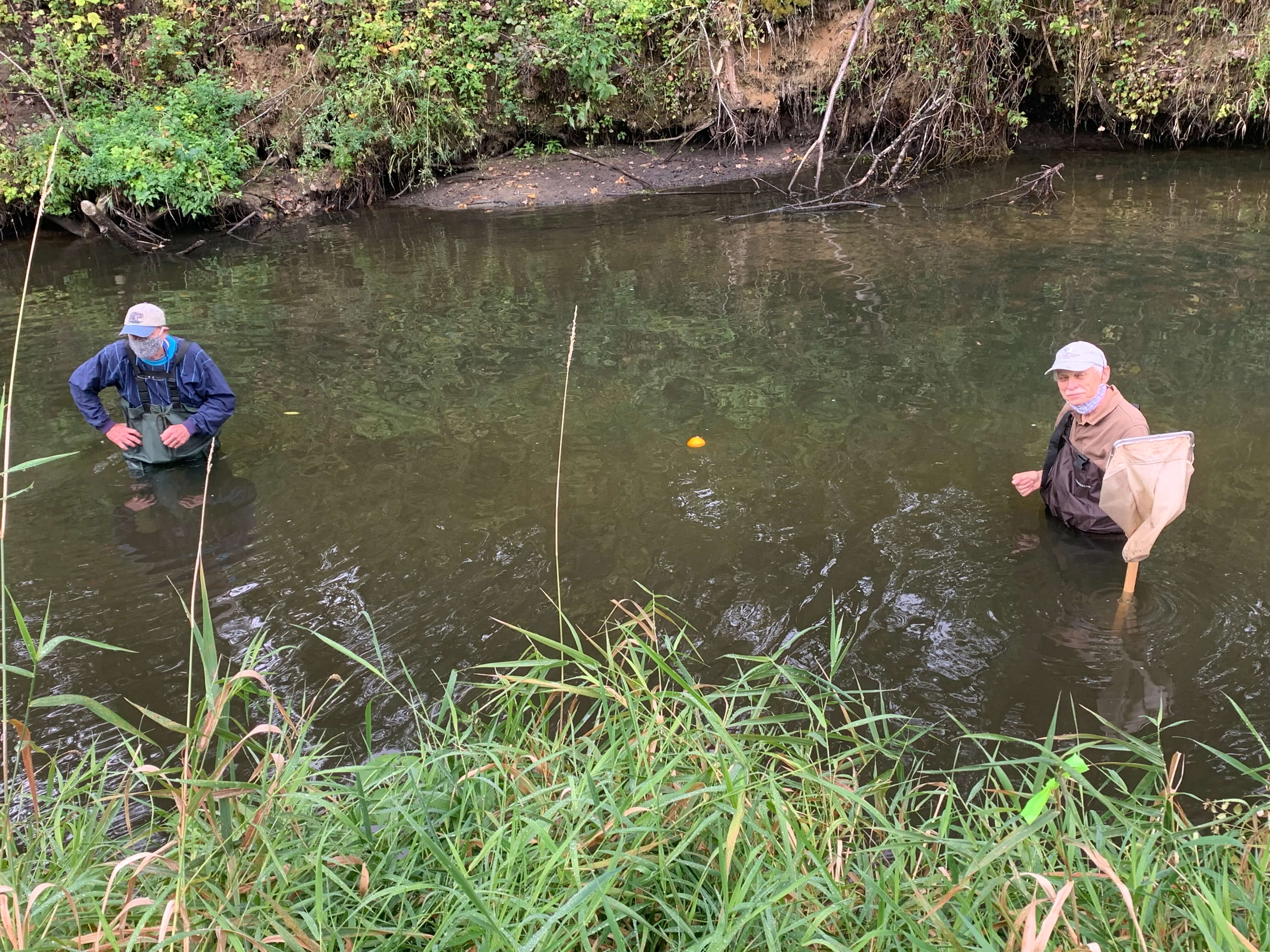
SHEP volunteers measure velocity in a stream.
As important as it is for SHEP volunteers to produce great data, the program also impacts our community in other positive ways. SHEP brings volunteer monitors together with local officials and decision-makers.
These relationships allow SHEP volunteers to better understand how local decisions impact water quality and stream health, while at the same time reminding local decision-makers of the importance of water quality.
To volunteer or learn more
To learn more about SHEP overall, contact us at shep@fmr.org or 651.477.0934.
If you're interested in participating, check out the SHEP volunteering page.