
Crosby Farm Regional Park
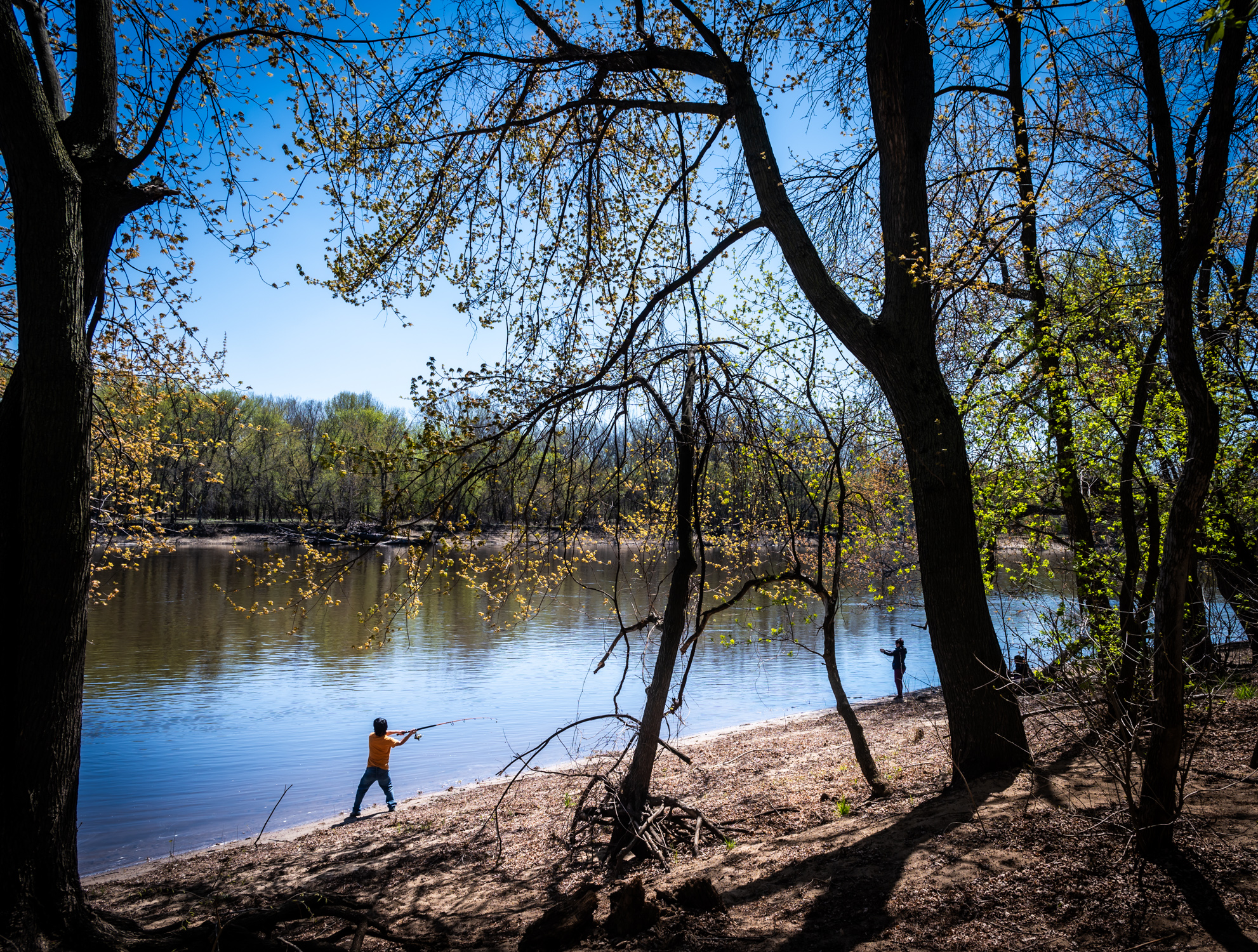
Nestled at the confluence of the Mississippi and Minnesota rivers, this St. Paul gem is home to 534 acres of stunning floodplain forest, oak woodlands and restored prairie tucked under towering limestone bluffs. (Photo by David Wheaton)
Where is Crosby Farm Regional Park?
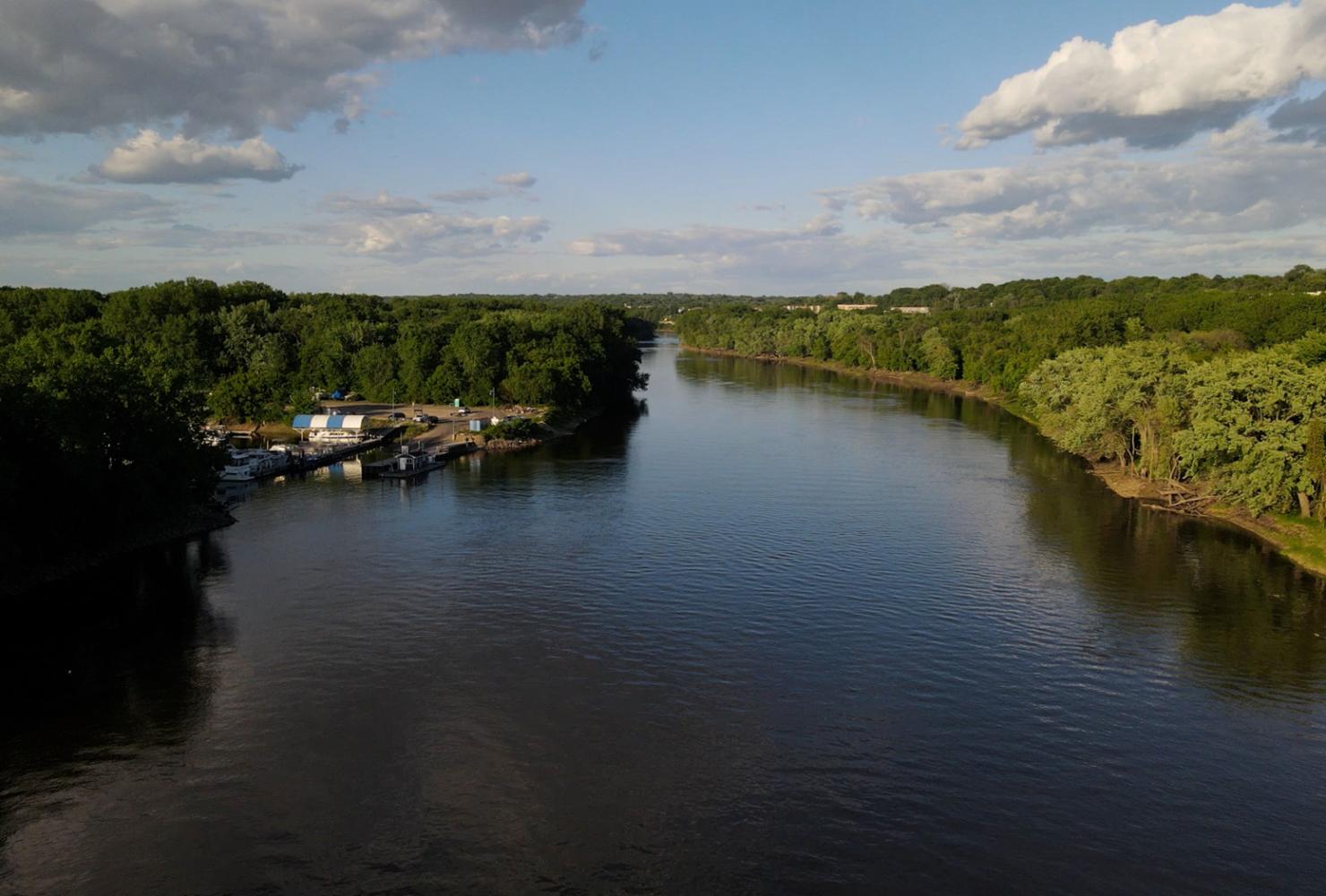
This City of St. Paul park lies alongside the Mississippi River between two other St. Paul parks: Hidden Falls and Lilydale. It's also next to Watergate Marina, a popular boat launch and rental spot. Its location within the Mississippi National River and Recreation Area make it the perfect site for the proposed future home of the Mississippi River Learning Center — a year-round environmental learning center and headquarters of the National Park Service in the Twin Cities.
Our restoration and volunteer work at Crosby contributes to a corridor of protected habitat and parkland both north and south of the confluence, and adds important restored acres near partner sites like Mni Owe Sni (Coldwater Spring), Fort Snelling State Park and Pilot Knob. This area is a nexus of important habitat, deep cultural significance and long-term partnership.
The public is welcome to visit Crosby Farm Regional Park. (See the St. Paul Parks and Recreation website for more info.)
Our work here takes place on Dakota homelands.
What's special about Crosby Farm Regional Park?
Crosby Farm Regional Park sits within a natural floodplain at the end of the Mississippi River Gorge. Floodplains support rich ecosystems, containing more species and nutrients than the river itself. When periodic flooding causes the river to spill over, water and sediment flood the adjacent land, and fish and other aquatic species are carried to the lakes and ponds scattered throughout Crosby's forest.
A healthy floodplain also provides natural filtration and flood storage for stormwater runoff before it enters the river. Crosby Farm contains Crosby Lake, as well as wetlands and groundwater seeps from along the limestone and sandstone outcroppings that line the north side of the park.
The park boasts miles of paved trails ideal for hiking or biking and is open year-round for a variety of recreational activities, including fishing and picnicking. With two entrances and dedicated parking lots, it’s easy to explore the large site, and a picnic shelter complete with a fire pit and restrooms make the west end of the park an inviting spot to spend the day.
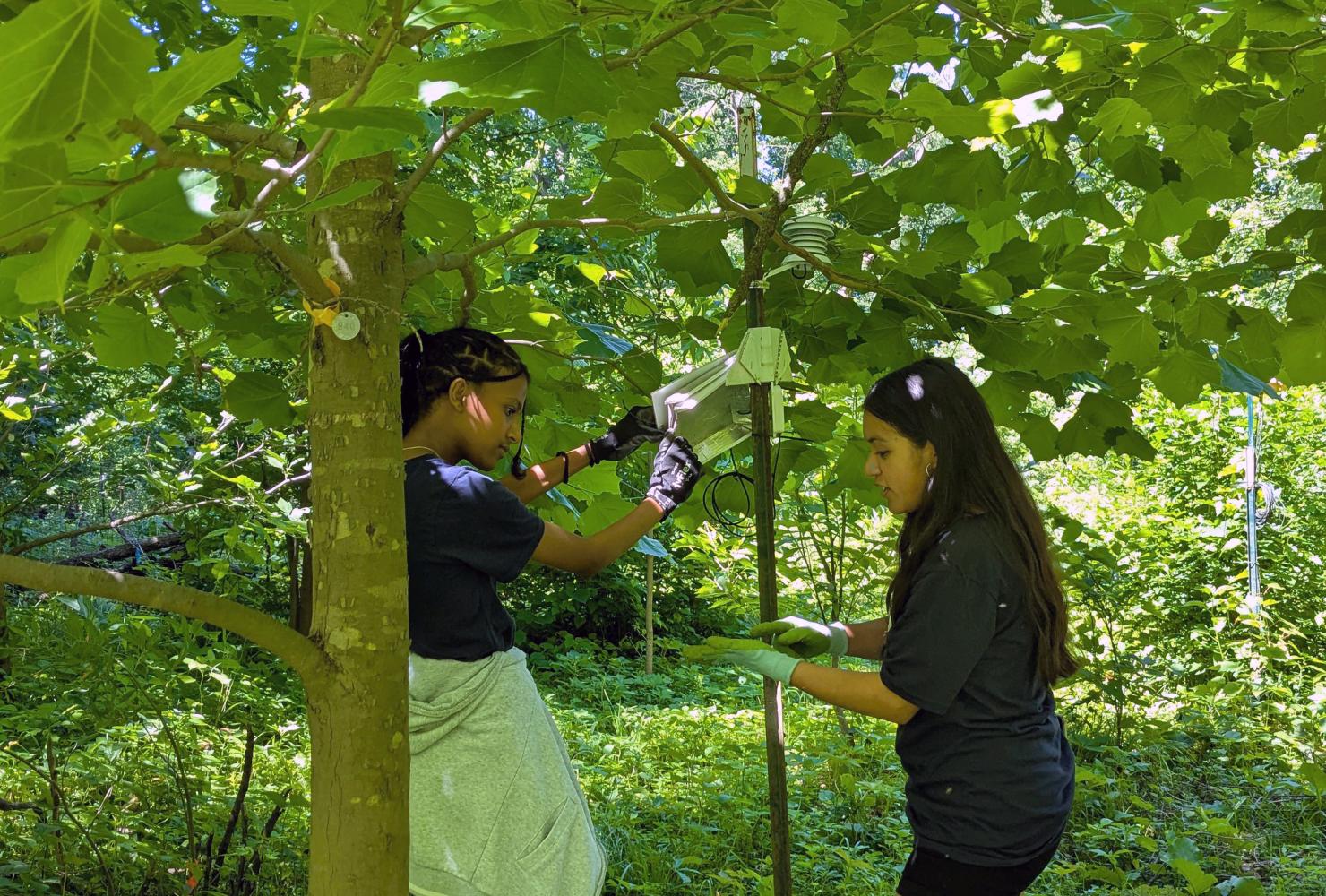
In addition, the park is home to the only urban site in the nationwide Adaptive Silviculture for Climate Change experiment — a University of Minnesota-led project that FMR has partnered on. The goal of the project is to identify tree species that can help our forests adapt to a changing climate, as well as identify options for replacing the ash canopy lost to emerald ash borer.
Our work at Crosby Farm Regional Park
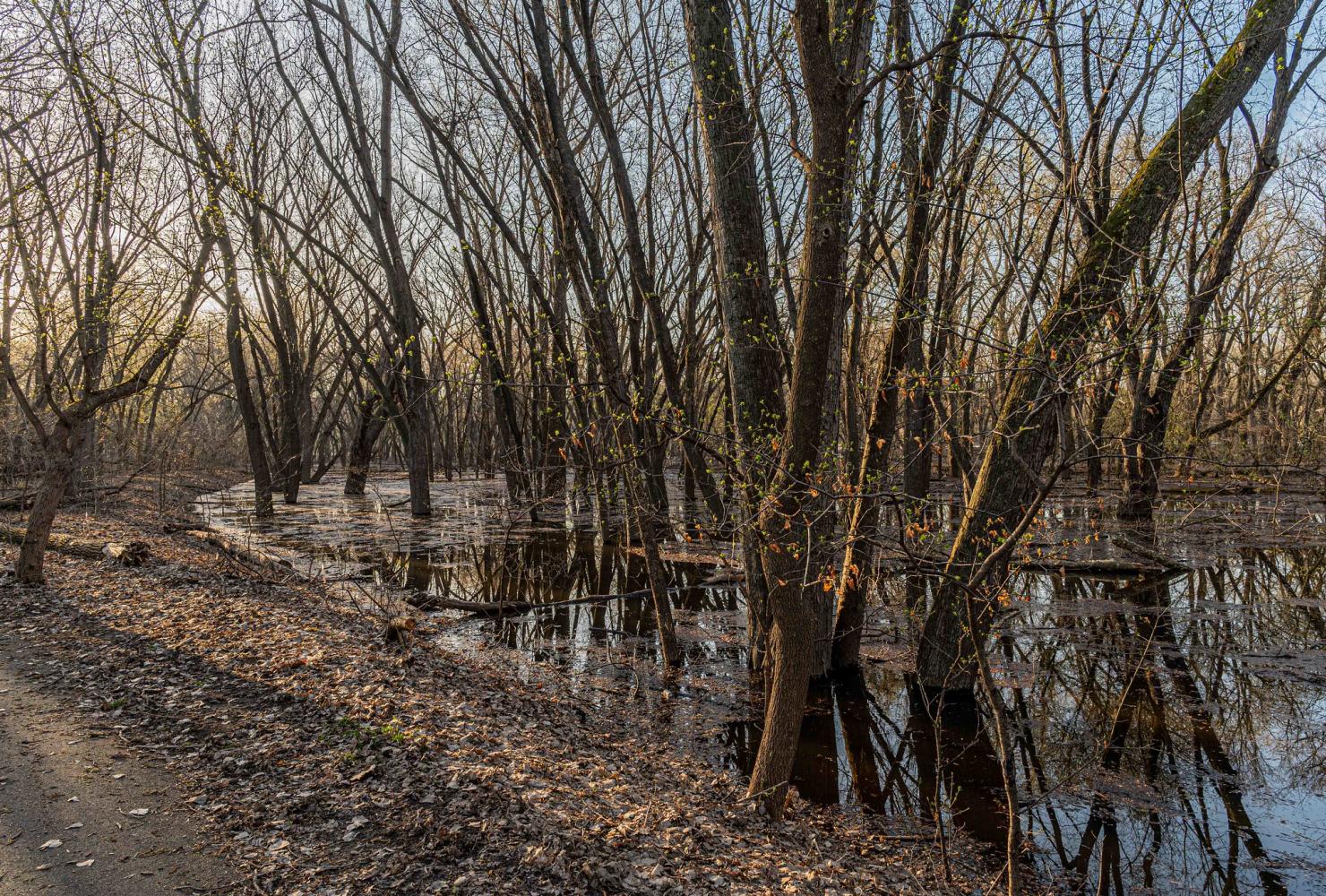
Crosby Farm is named after the family that owned and farmed the land in the mid-1800s, resulting in some of the large open areas at the otherwise floodplain-forest-dominated site. These areas west of Crosby Lake now boast diverse prairie and open turfgrass areas used for group programming. While much has changed at the site over the last century, the site’s floodplain forest remains intact. However, these areas are dominated by intense annual flooding at the site. In some years, you’ll see kayakers and canoers paddling through the forest on top of what are normally bike and pedestrian trails. This flooding makes the forest ever-changing and can affect things like native tree regeneration and invasive species presence. Moreover, the forest at Crosby has been hard hit by emerald ash borer, creating a canopy of largely dead ash trees that make long-term management difficult.
Other issues at Crosby Farm Regional Park include invasive species, careless recreational use and runoff from streets, lawns and waterways. Runoff is a major source of urban flooding and water pollution, a concern especially for floodplains. Native plantings help reduce damage by filtering floodwater through their extensive root systems, allowing for nutrient storage and pesticide breakdown in the soil. The health of the floodplain prairie at Crosby Farm Regional Park is intimately tied to water quality in the Mississippi River.
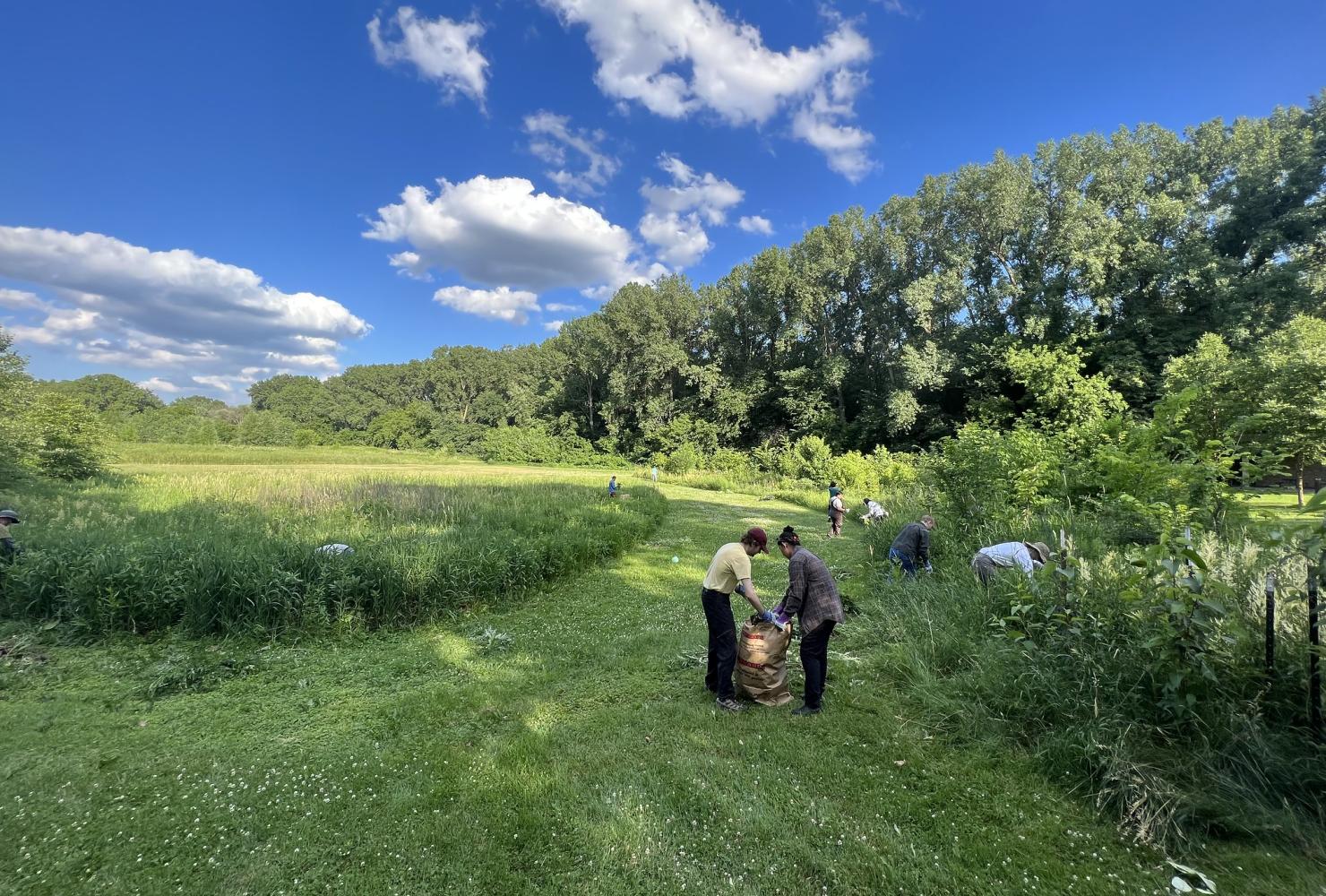
In 2008, FMR partnered with the Capitol Region Watershed District and City of Saint Paul Parks and Recreation to restore 4 acres of floodplain prairie habitat at the park. In the years that followed, volunteers planted, watered and mulched almost 2,000 native prairie plants, and the park is now home to a beautiful interpretive prairie, a runoff-reducing berm and a raingarden. FMR also conducted contracted invasive species removal of priority areas at both the east and west ends of the park.
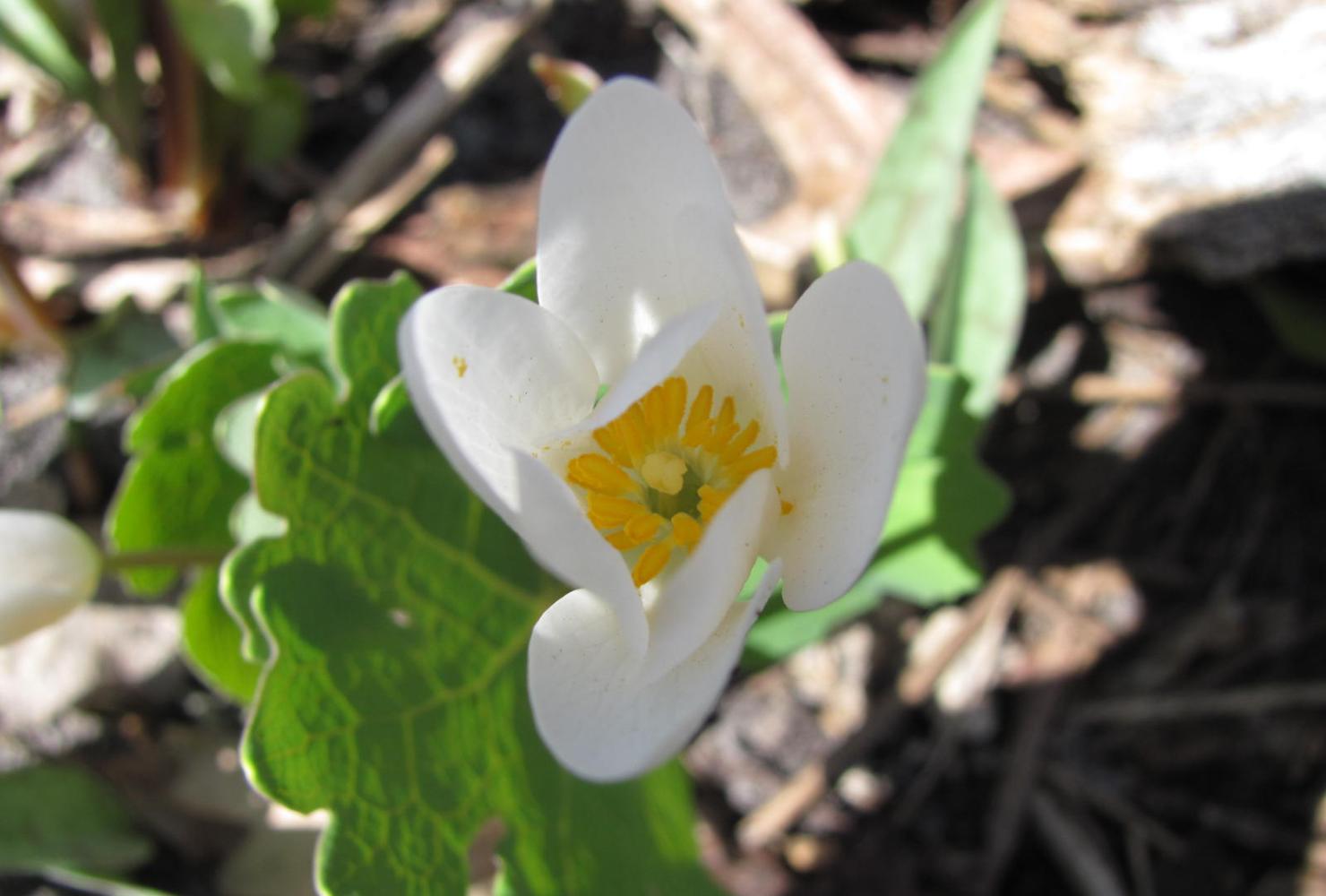
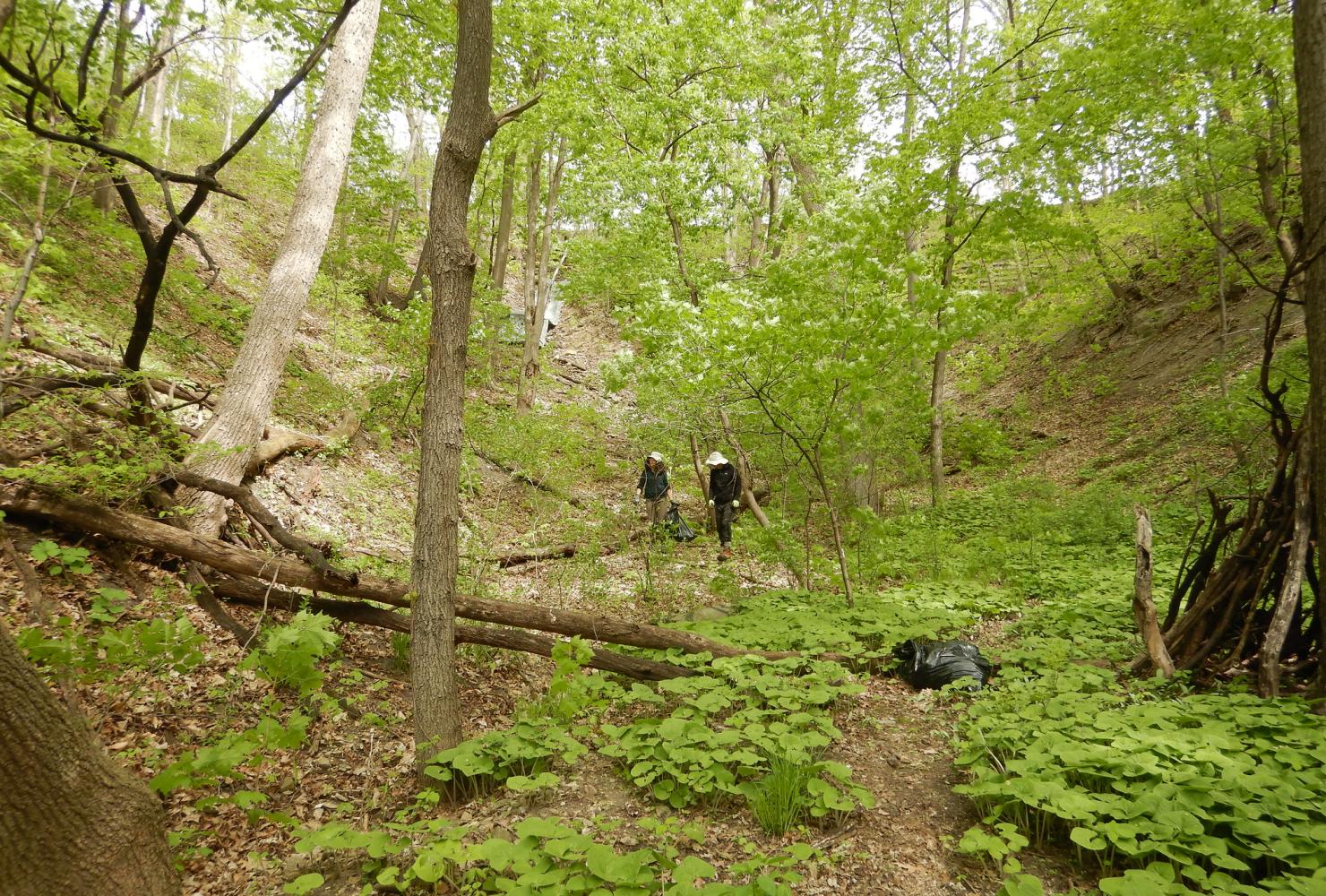
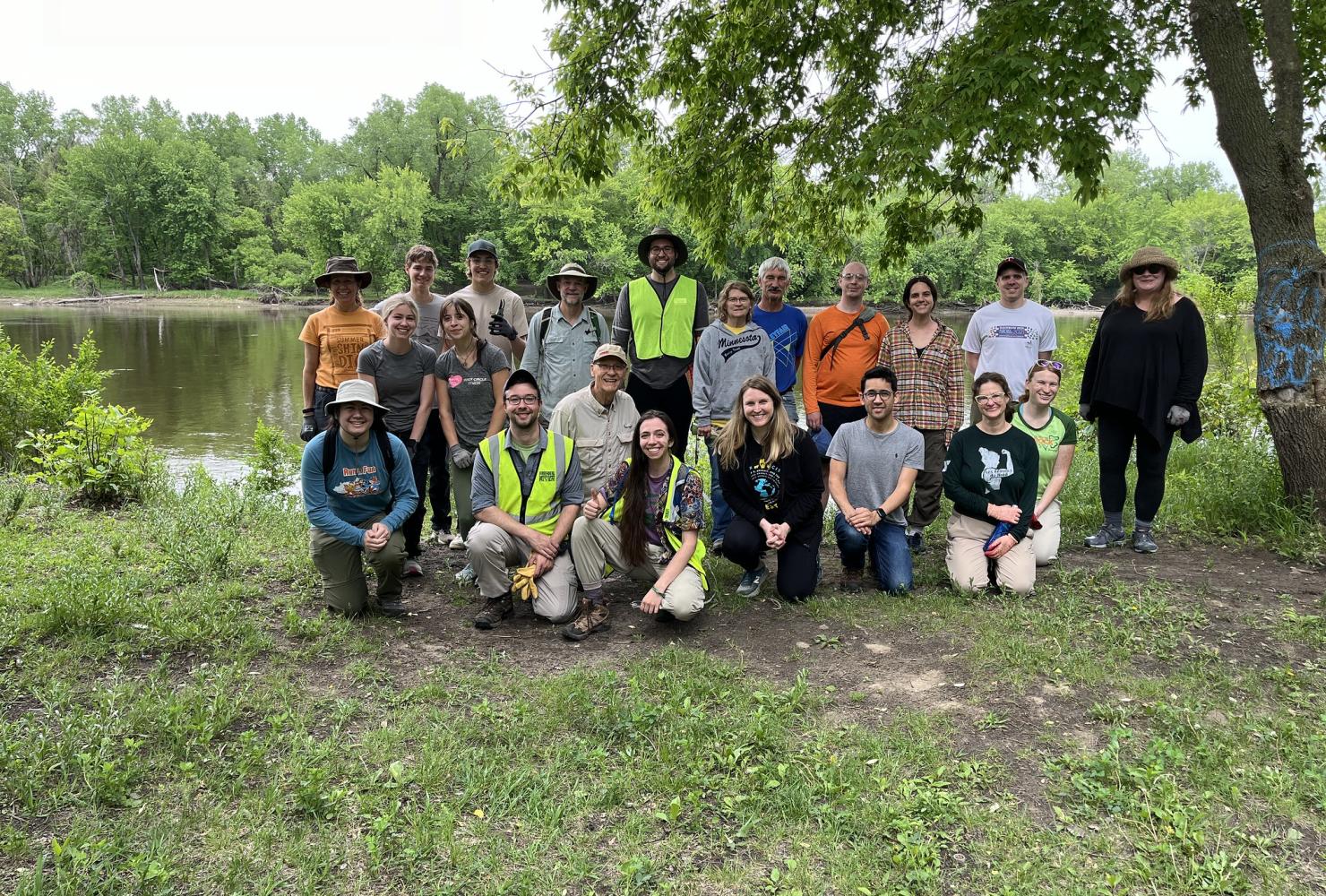
Today, FMR engages volunteers at the park each year, while partners like the City of St. Paul and Great River Greening have expanded restored acres at the site. FMR volunteers help protect a rare patch of spring ephemerals through FMR's Pledge-to-Pull volunteer program each spring, removing garlic mustard and other invasive plants. The west end of the park is also home to one of FMR’s long-term critical period cutting experiment sites, maintained with volunteers and students from Open World Learning School.
Find out more and get involved
- Volunteer with us to restore places like this or join the River Gorge Stewards. If you'd like to be notified of upcoming volunteer events in or near the Mississippi River Gorge, please let us know! Contact our volunteer program manager at volunteer@fmr.org, 651.477.0925.
- Learn more about the Mississippi River Gorge.
- Get to know Minnesota's woodland spring ephemeral wildflowers.
Partners and funders for our work at Crosby Farm Regional Park
This work was made possible by funding from Capitol Region Watershed District, the Environment and Natural Resources Trust Fund and by our generous volunteers and donors like you!
Where we work
FMR maintains over three dozen habitat restoration and land protection sites in the metro area.